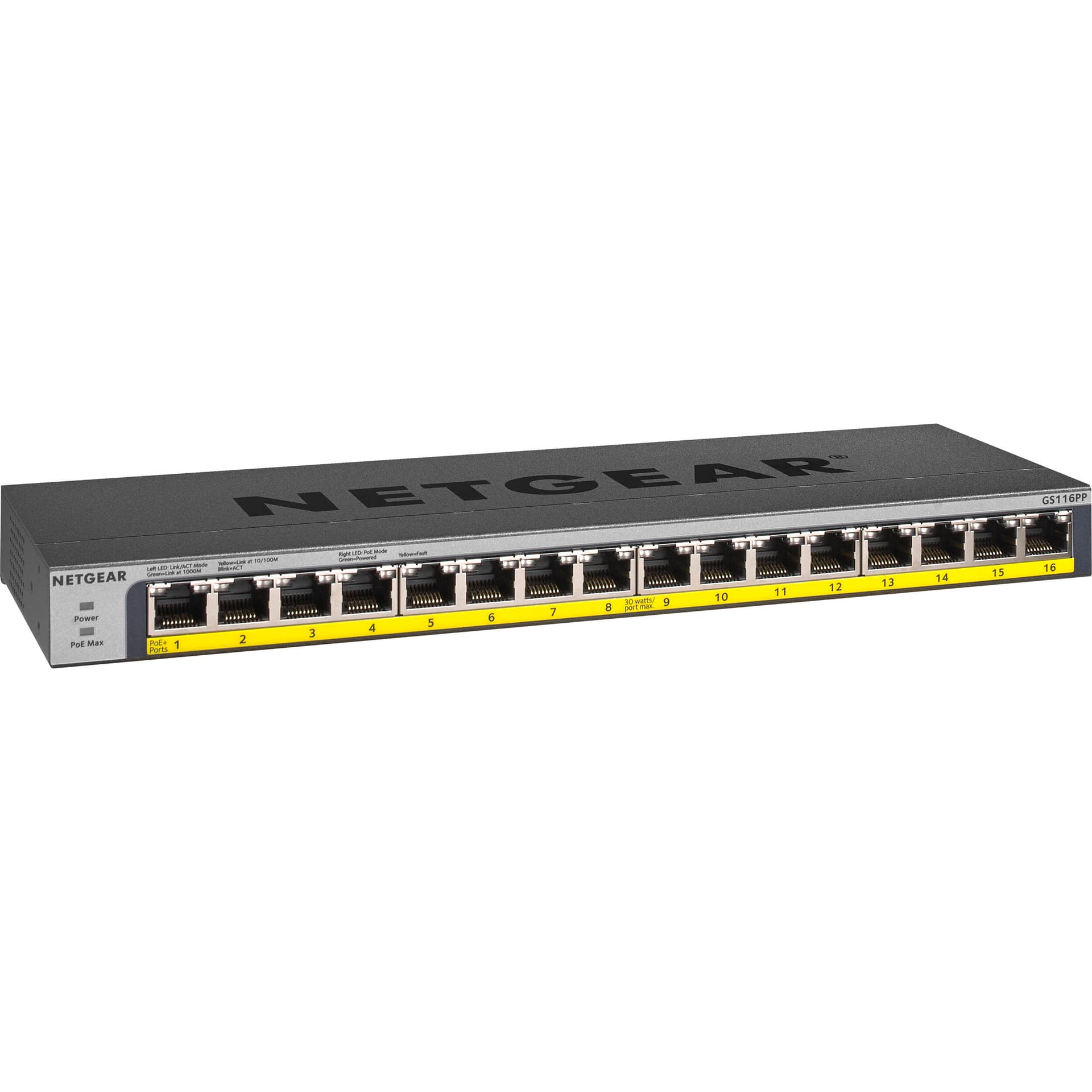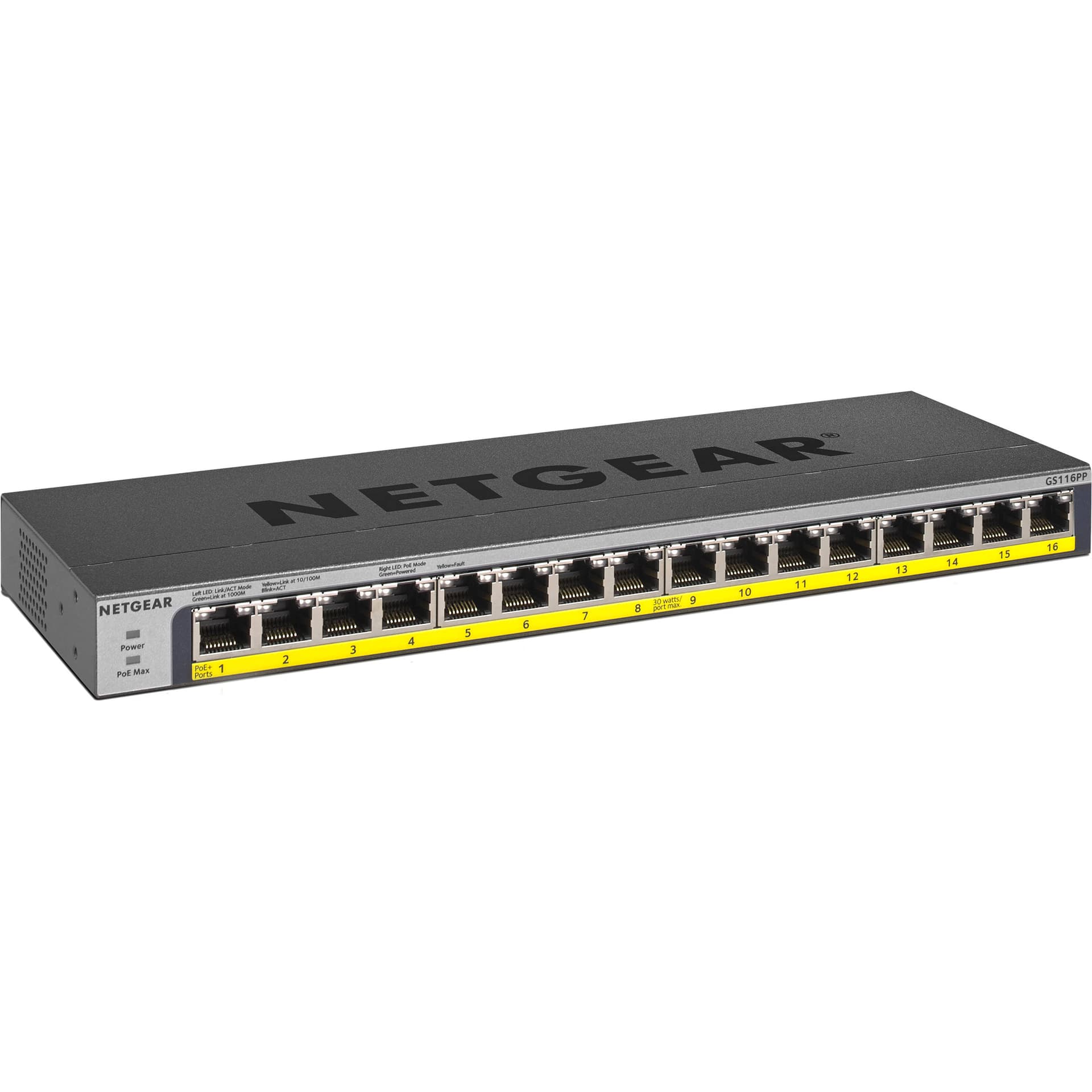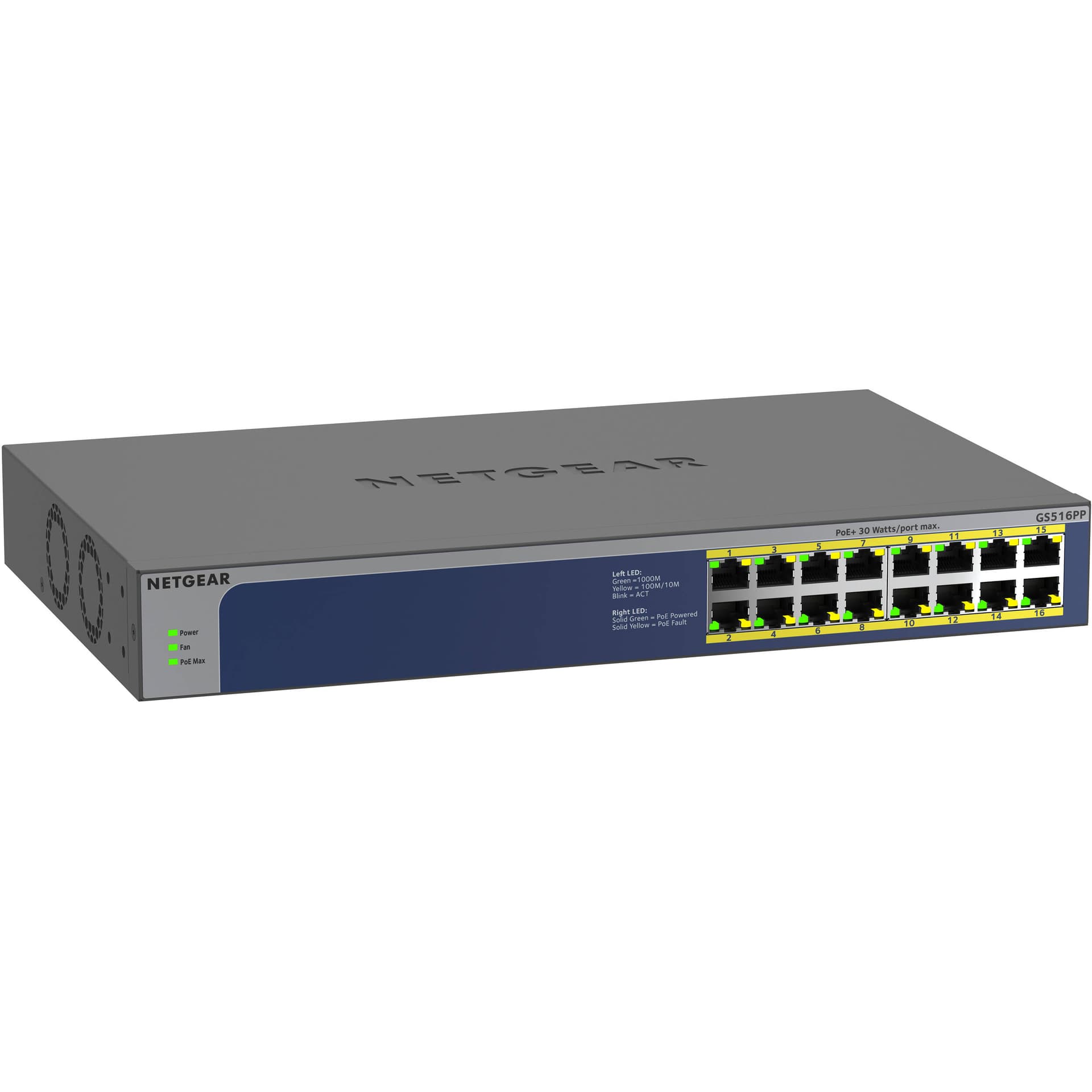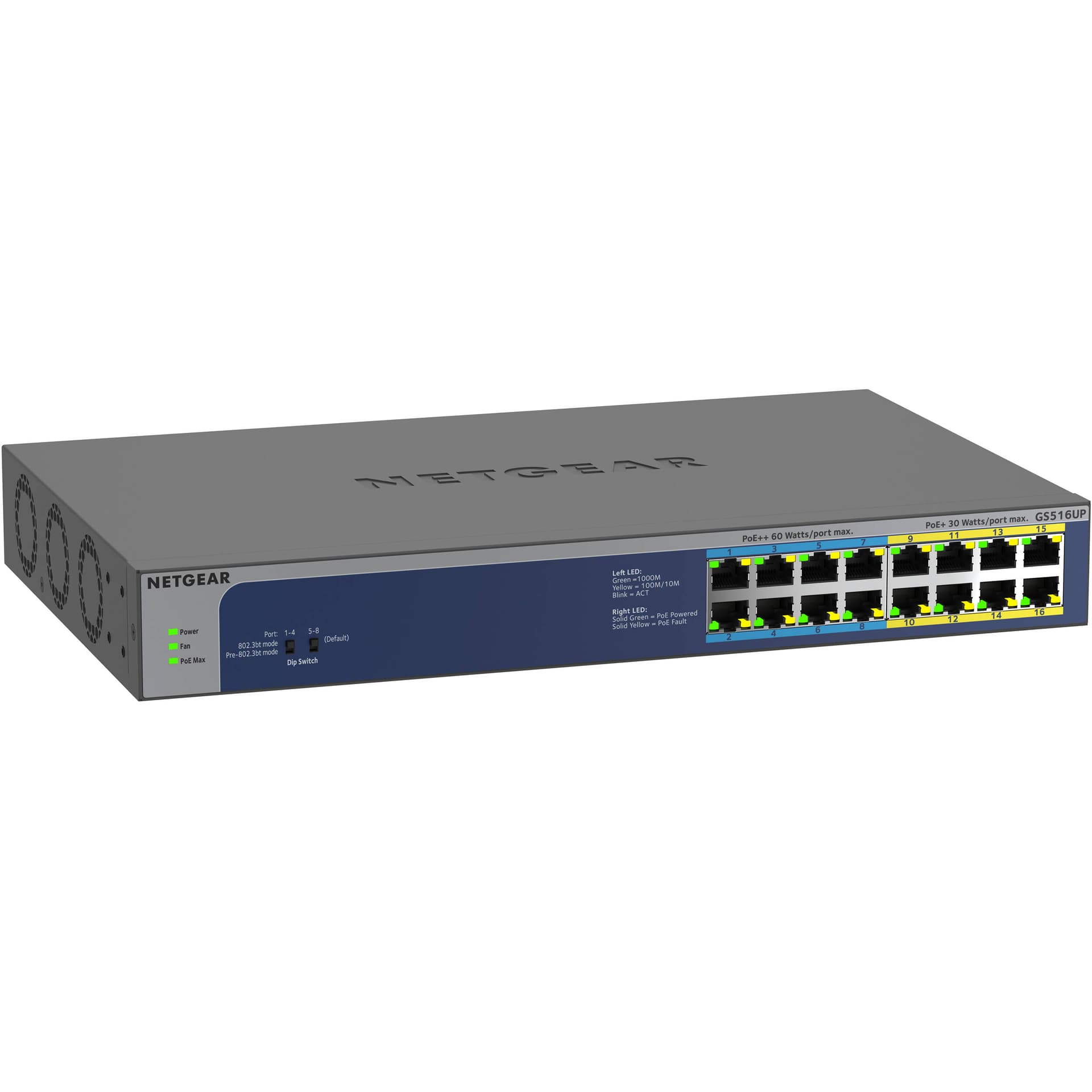
In Stock
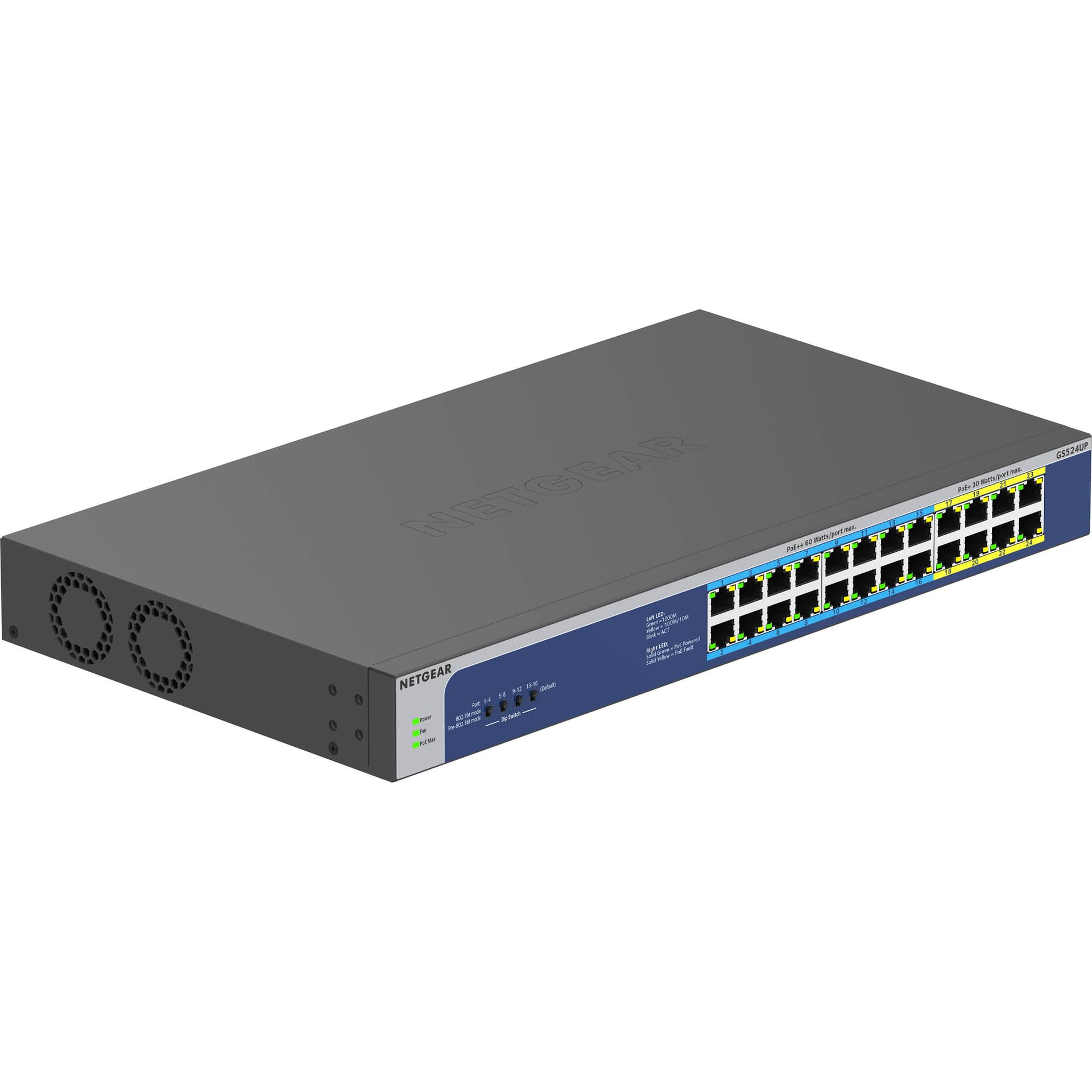
Netgear GS524UP-100NAS 24-Port Gigabit PoE++ Switch, 480 W | Unmanaged
Netgear
MPN: GS524UP-100NAS
$426.58$725.90
MAP: $529.99
Free shipping on orders over $500
Authorized Dealer — Full manufacturer warranty
Key Features
- 24-port Gigabit Ethernet switch
- 16 PoE++ ports for high-power devices
- 480 W total PoE budget
- Unmanaged switch architecture
- Designed for access-layer deployments
- Gigabit Ethernet connectivity
- Netgear GS524UP-100NAS model
- Power dense endpoints with 16 PoE++ ports and a 480 W budget
Build a cleaner, higher-capacity edge with a switch designed for demanding PoE environments. The Netgear GS524UP-100NAS provides 24 Gigabit Ethernet ports, including 16 PoE++ ports, and a substantial 480 W PoE budget. That combination supports more powered devices from a single access switch, reducing the need for separate injectors and simplifying rack design.
For teams deploying Wi-Fi access points, surveillance cameras, VoIP phones, or other powered endpoints, the value is in the power headroom. PoE++ support gives you room for devices that draw more than standard PoE or PoE+ can comfortably supply, while Gigabit connectivity keeps the access layer responsive for traffic-heavy endpoints.
Because it is unmanaged, this switch is well suited to environments that want high port density and strong power delivery without adding configuration overhead. It is a practical choice when the priority is dependable endpoint power, straightforward installation, and a switch that can support more ambitious edge deployments than lower-budget alternatives.
Ideal For
- Powering Wi-Fi access points in dense office or campus deployments
- Connecting PoE cameras and edge devices in security networks
- Supporting VoIP and collaboration endpoints in branch closets
- Centralizing high-power PoE delivery for AV or access-layer builds
Why This Product
- 116 PoE++ ports support higher-power endpoints
- 2480 W budget exceeds typical PoE+ access switches
- 324 Gigabit ports suit dense edge deployments
- 4Unmanaged operation reduces configuration overhead